


Between Control and Surrender: Juan Pablo Castro on Intuition, Decision, and the Limits of Authorship
There is a moment — just before the image fully resolves — when control gives way to something less predictable, and authorship becomes a negotiation between intention, instinct, and chance. In his practice, Juan Pablo Castro works precisely within that threshold, where decision, tension, and intuition define not only the image but also the artist's position behind it.

Juan Pablo Castro with a collage from the photographic artworks "Industrial Clouds Over Miami", 2014, and "Blue Roma", 2016.
Image: Courtesy of Juan Pablo Castro
From collaborations with major publications and brands to the development of his own artistic projects, Castro navigates the shifting boundary between image and object, structure and spontaneity, clarity and ambiguity. His work reflects a position in which authorship is not tied to style alone but to the decisions that determine what is seen, what is removed, and what remains unresolved — articulated through a distinctly visual language defined by industrial aesthetics, color precision, and rigorous attention to form.
In this conversation, he speaks about control and chance, the role of intuition and responsibility, the limits of aestheticization, and what remains irreducible in the age of AI — as well as the evolving framework of his practice and the space he envisions for it within contemporary art.
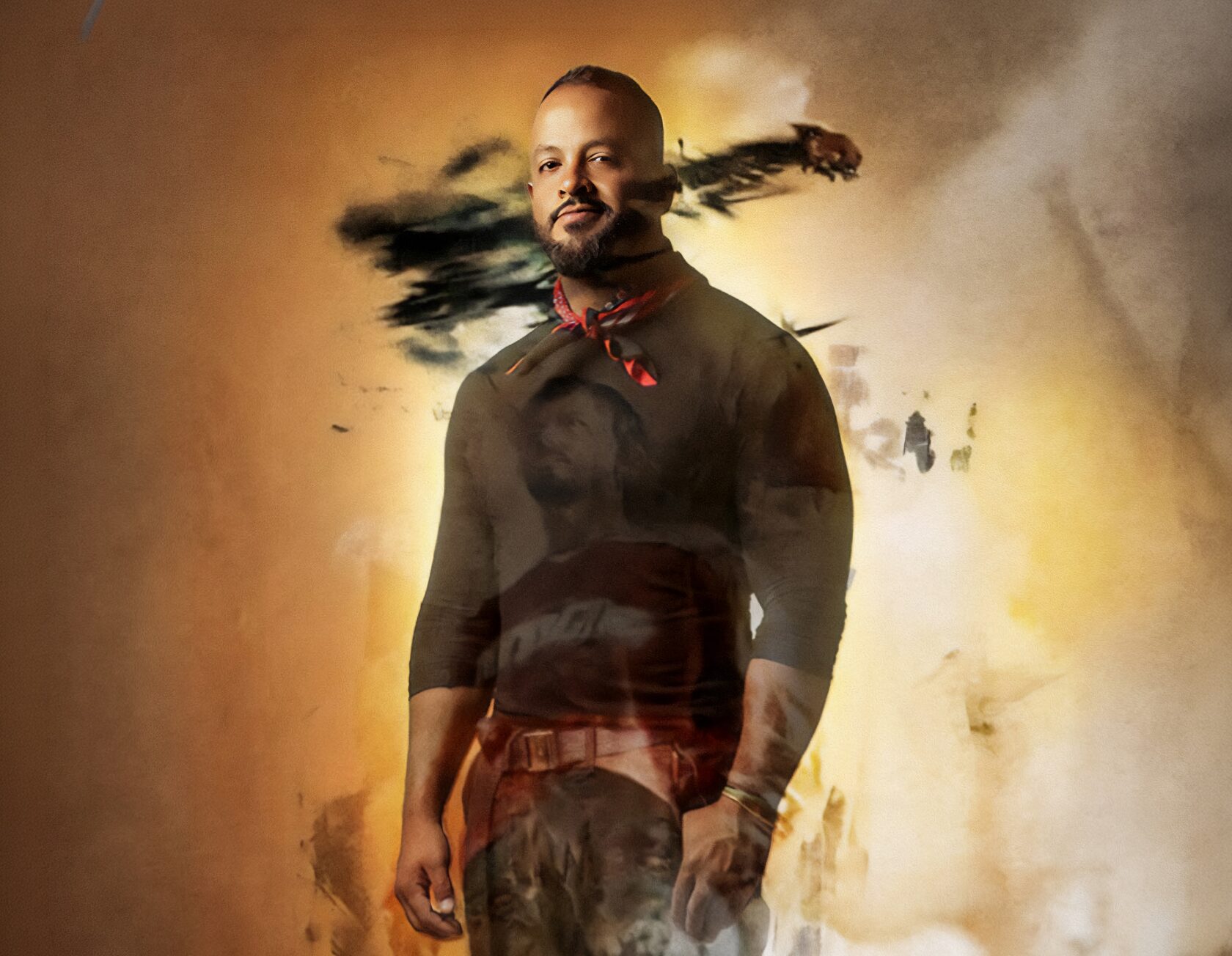
His practice is grounded in structure, intention, and authorship.
HERO PROFILE

With a background in industrial design, Castro approaches the image as both a composed structure and a responsive field — balancing control with instinct, and precision with openness to chance. Each project is conceived not as a standalone image but as a complete visual environment in which narrative, form, and sequencing define the work.
Working across art, fashion, and editorial contexts, his images move beyond documentation into constructed realities, where the body, space, and cultural codes are reconfigured through tension and clarity rather than excess.
His work has appeared in Vogue Mexico, L’Officiel, Elle Arabia, and Architectural Digest, and includes collaborations with brands such as Montblanc, Omega, Burberry, and Adidas. His work has been presented in group exhibitions at the Ralph Pucci Wynwood Gallery during Miami Art Week.
Based in Miami, with an expanding presence in New York, Castro continues to develop his practice across geographies, extending his reach within a broader cultural framework.

"Blue Roma", 2016, from the series "Architecture".
Image: Courtesy of Juan Pablo Castro

"Industrial Clouds Over Miami", 2014, from the series "Landscapes".
Image: Courtesy of Juan Pablo Castro



Left: "Carolina", 2020, from the series "Sculptures".
Center: "Attraction", 2018, a mirrored image of a building featuring "Muro Abriéndose" by Eduardo Ramírez Villamizar.
Right: "Limiting", 2018, from the Series "Signs".
Image: Courtesy of Juan Pablo Castro
The following interview has been condensed and edited for clarity.
Fillin Magazine:
You entered photography from industrial design — a field where quality is relative
and value are measured through function, precision, and a disciplined relationship with constraints. How do you define the “quality of your own image” today: through conceptual clarity, precision of visual statement, force of impact, or the image’s ability to shift the viewer’s perceptual optics? By what sign do you understand that an image truly works — and that any further refinement would result in loss rather than improvement?
Juan Pablo Castro:
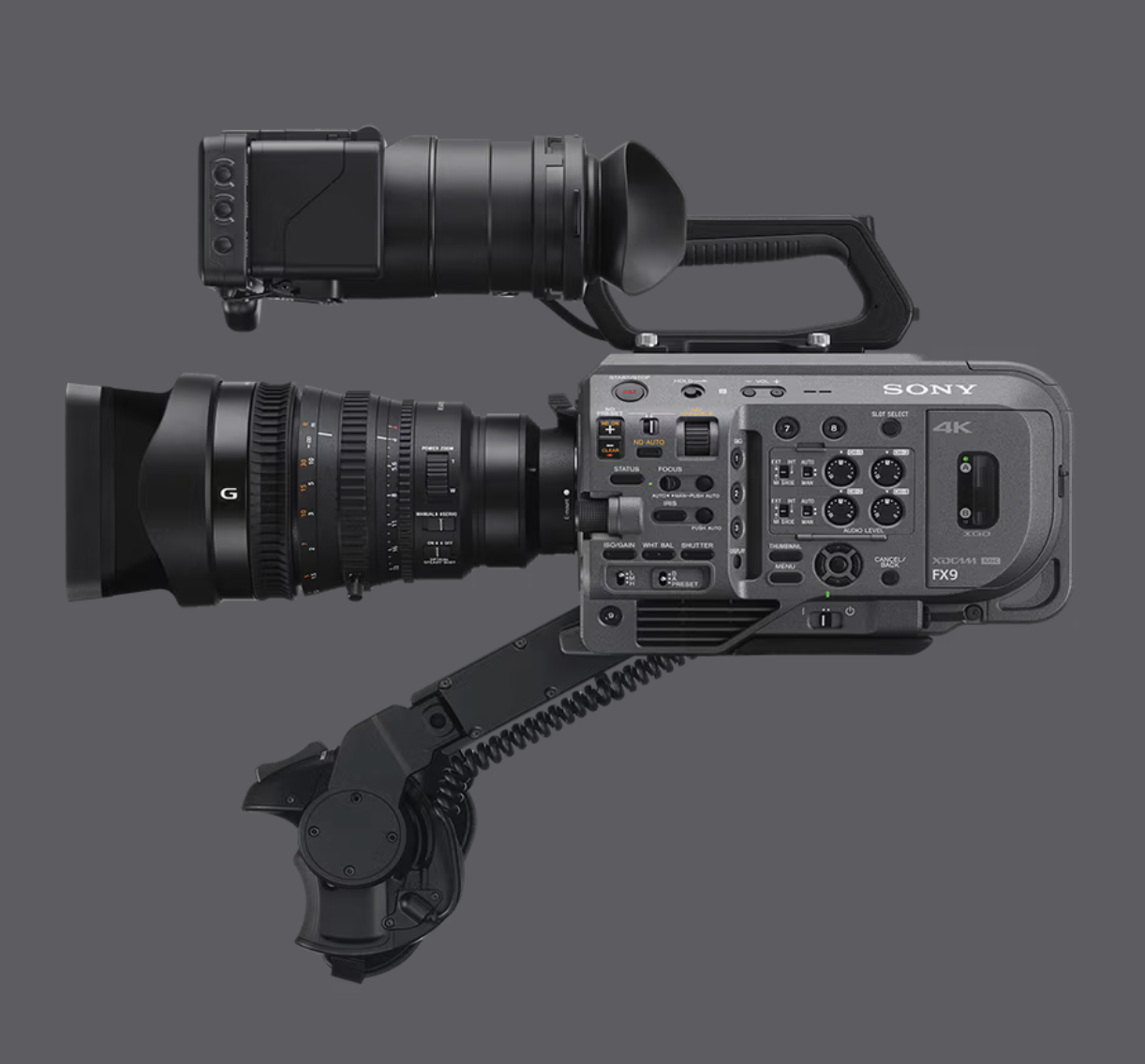
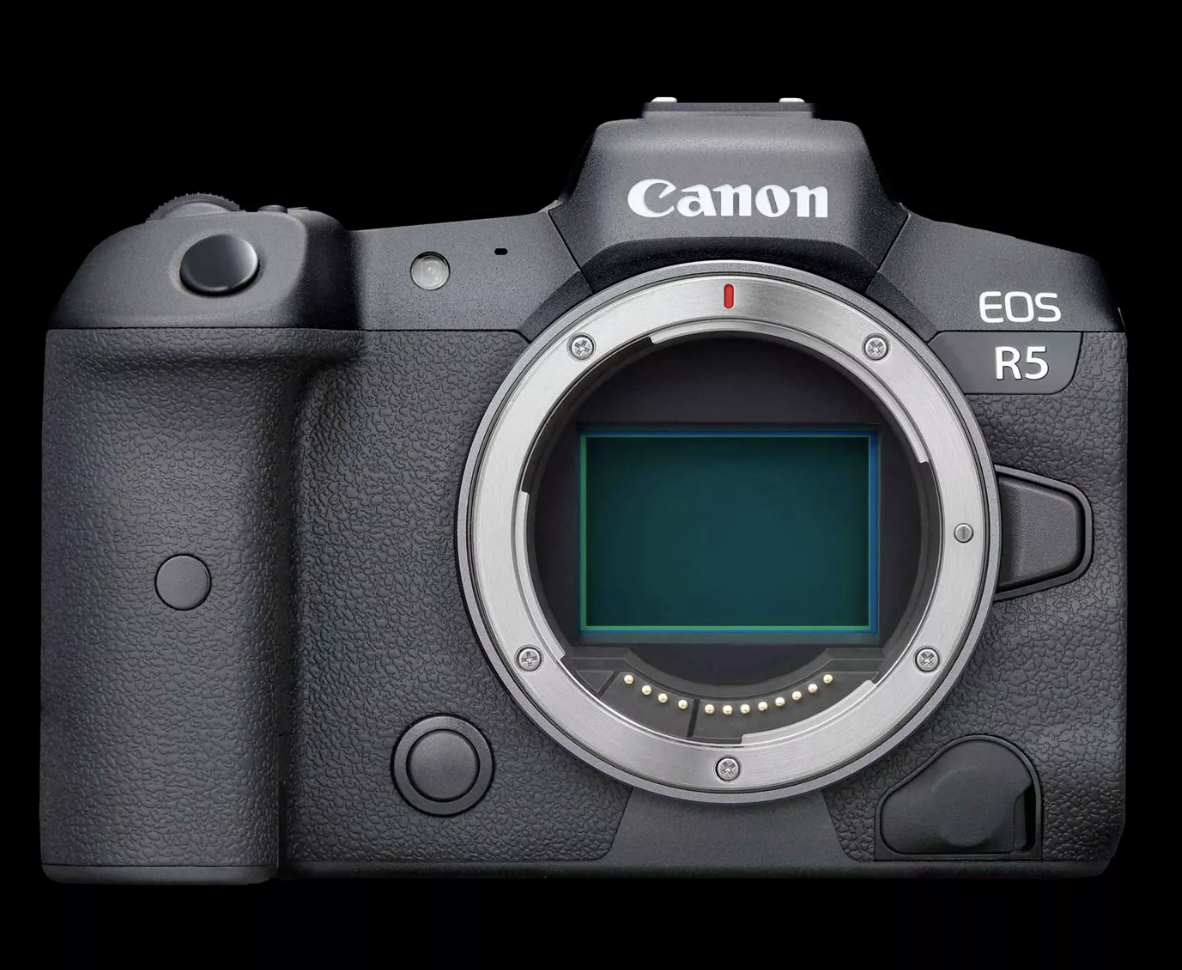
I like that you’re using the word “quality” because to me it’s completely relative. I’ve realized I can build a strong image on a Sony FX9 or a Canon R5 — and still get interesting results on an iPhone. They’re not the same level, but each serves a purpose. So there’s no fixed definition of quality for me. If I had to define it, it’s not about technical perfection and more about clarity of intention and the precision with which that intention is translated into a visual statement. What matters is the purpose behind the image and whether it has the capacity to shift perception, even subtly.
Early on, I delivered an editorial with very high ISO images and was told I was too young for that, as if I needed to prove technical correctness before being allowed to develop a visual language. That stayed with me.
Now I trust my eye. An image works when it feels resolved according to the vision behind it — when all elements are in tension but also in balance, and nothing feels excessive or unresolved. When adding more starts to dilute that feeling, that’s when I know it’s done. At that point, refinement stops being precision and becomes noise.

"No Change…No Change", 2014, from the series "Architecture".
Image: Courtesy of Juan Pablo Castro

"Bacunayagua", 2016, from the series "Landscapes".
Image: Courtesy of Juan Pablo Castro
Your practice brings together commercial and art photography, video, and creative direction. At what point in the process do you experience yourself specifically as a photographer, and at what point as a director or an architect of visual language? Which key decisions do you fundamentally refuse to delegate, even when working with an ideal team — and why?
Juan Pablo Castro:
I’m still very involved in the shooting process with my clients — that’s the moment where I experience myself most directly as a photographer, within the act of seeing and responding in real time. I know that will evolve as projects scale.
What I don’t delegate are decisions that define my visual identity, because those are the points where the image either becomes mine or loses that authorship.
I often delegate parts of post-production, but I stay closely connected to it. A minimal shift in angle or framing can completely change perception, and those shifts often carry the image's meaning.
On the commercial side, I naturally step into a creative director role, or more precisely, into constructing the visual language of the project — thinking about sequence, rhythm, and how individual images relate to each other as a whole. As I grow, I attract people who want to learn and collaborate, and they become part of the execution. That’s where I allow more flexibility, because once the core structure is defined, the process can open up without losing coherence.

"Blackened Visions of Tomorrow", 2025. Featuring sculptures by John Koga, realized in collaboration with Ralph Pucci.
Image: Courtesy of Juan Pablo Castro



Visual campaign "River Nyle", 2025, shot & creative direction by Juan Pablo Castro; production by Someone Agency; assistant: Sandro Vargas; model: Falonne Dos Santos (World Best Models Agency); make-up & hair: Beatrice Espinoza; location: Studio X 360.
Image: Courtesy of Juan Pablo Castro
Fillin Magazine:
Architecture and urban space in your work often cease to function as background and instead become autonomous acting elements. By which criteria do you select a location: its structural geometry, social code, symbolic tension, or the “memory” of the space? Was there a project in which the location completely rewrote the original concept, and what did you then change in your method?
Juan Pablo Castro:
First, it has to capture me visually. That’s the entry point. Usually it’s something in the structure — the geometry, the way lines or volumes interact — that creates that first connection. If it also carries memory or symbolic weight, that’s a plus, but those layers tend to reveal themselves more slowly.
In places like Rome or Cuba, I expected everything to feel aligned with my work, but it was actually difficult. It took time to find something that truly felt like mine. What I ended up responding to was not the obvious or iconic, but quieter situations where the space had a different kind of tension than I initially imagined.
Those moments forced me to slow down and let the space redefine the direction rather than impose an idea on it. In practical terms, that meant letting go of predefined frames and becoming more responsive — observing how the space behaves and how people move through it, and allowing that to shape the image rather than trying to fit it into an existing concept.
Left: "Balance", 2020, from the series "Things".
Right: "Milan", 2016, from the series "Signs".
Image: Courtesy of Juan Pablo Castro

"El Malecón 5", 2019, from the series "Landscapes".
Image: Courtesy of Juan Pablo Castro
In many of your series, the familiar is subtly displaced and subjected to deformation — the image ceases to be a document and becomes a thesis. What matters more to you: the recognizability of the object or the precision of the sensation and thought you trigger in the viewer? How do you maintain balance so that formal distortion does not become an end in itself?
Juan Pablo Castro:
The only thing that matters while I’m creating is that I love what I’m seeing. Everything else is out of my control. Recognizability can be a starting point, but what stays with me is the precision of the sensation — the feeling or tension the image holds.
I’ve learned to trust that instinct without overthinking consequences. The image doesn’t belong only to me. It lives in the viewer. Everyone sees it from their own experience, so I don’t try to fix a single reading or protect the image from being reinterpreted.
So, the balance comes from honesty in that moment, not from trying to control interpretation. If a distortion is there, it must serve that feeling — to intensify it. The moment it becomes an effect in its own right, without necessity, I know the image starts to lose its truth.
Left: "HaHa", 2021, from the series "Fun".
Right: "What a Ride!", 2019, from the series "Fun".
Image: Courtesy of Juan Pablo Castro

"Souvenirs De Paris 4 Everyone", 2018, from the series "Fun".
Image: Courtesy of Juan Pablo Castro
You collaborate with major publishing houses and media outlets (Vogue Mexico, L’Officiel, AD, among others), as well as with brands such as Montblanc, Omega, and Burberry, while simultaneously developing your own art projects, which are presented by galleries and art marketplaces. At what moment does an editorial or brand brief turn into an authorial statement? By which markers do you recognize that a brand strengthens your visual language rather than substituting it?
Juan Pablo Castro:
I like adapting to different perspectives, especially when working with brands. At the same time, I’ve been focused on building a strong voice, which has been challenging because my work is very contrasting and not always aligned with what’s happening in fashion right now.
I see it as speaking different languages while staying the same person. My background in industrial design trained me to think across disciplines. A brief becomes an authorial statement at the moment I can translate it through my own visual logic — when the image still feels unmistakably mine, even if it serves a brand.
I don’t overthink it — I listen, adapt, and execute, but I pay attention to whether the collaboration leaves space for my way of seeing — the contrast, the tension, the framing. If those elements remain present, I know the brand is strengthening my language rather than replacing it.



Left & Center: "Cool America", 2023, shot & creative direction by Juan Pablo Castro; production by Someone Agency; photography assistance by Felipe Abella; models: Rein Elcot, Steve Similien, Nathan Kenrik (U Models Management); styling by Michael Stallings.
Right: "Risk Magazine", shot & creative direction by Juan Pablo Castro; production by Someone Agency; photography assistance by Jack Goldsmith; models: Reinel Coto, Nathan Kenrick, Steve Similien (U Models Management); styling by Michael Stallings.
Image: Courtesy of Juan Pablo Castro



Left: "Grazia Bulgaria", 2021, shot & creative direction Juan Pablo Castro (Someone Agency); model Veronica Alonso (The Source Models); styling Steven Lassalle; make-up & hair Verginia Le Fay (Agency Gerard Artists).
Center: "L’Officiel Hommes Thailand", 2024, shot & creative direction by Juan Pablo Castro; production by Fashion & Art Event Agency; talent: Christian Carabias.
Right: "Vogue Mexico", 2020, shot & creative direction by Juan Pablo Castro (Someone Agency); production The Walk Collective Agency; production assistant Crystal Alves; model: Carolina Scheele (The Walk Collective Agency); Fashion "Nanoush" Mexico; make-up & hair by Paul J Natter; Location: 360 Space.
Image: Courtesy of Juan Pablo Castro
The commercial industry often demands clear, unambiguous imagery. What tools allow you to preserve visual complexity and inner tension under the pressure of deadlines and multi-layered approval processes? What are you willing to sacrifice in the process — and what will you never simplify, even at the cost of refusal?
Juan Pablo Castro:
The more I expose my artistic side, the more respect I get from clients. They come with a brief, but they allow me to interpret it, and that trust becomes the main tool to preserve complexity from the very beginning of the process.
I often hear, “You’re the artist, I trust you.” That usually happens when the intention is clear early on, before the project enters layers of approvals, where things tend to get simplified.
What I’m willing to adjust is execution — timing, production, technical decisions, even certain visual details if needed. What I won’t simplify is the core idea or tension. That’s the work. If that disappears, the image might still function, but it would no longer be true.

"L’Officiel Arabia", 2021, shot by Juan Pablo Castro (Someone Agency); production by The House of Style PR; creative direction & styling by Steven Lassalle; styling assistance by Stasy J.; model: MJ (Next Models Miami); make-up & hair by Natasha Katrina (Agency Gerard Artists); photography assistance by Carlos Saavedra (Saavedra Photo Art); Location: Studio X 360 & 360 Connect; Fashion Confessional Showroom Miami.
Image: Courtesy of Juan Pablo Castro
You work with mixed techniques and post-production, speaking of an “imagined result.” What does honesty in an image mean to you today: honesty of fact, intention, impact, or process itself? Where does the boundary lie beyond which intervention becomes manipulation — and who, in your view, defines that boundary: the author, the viewer, or the context?
Juan Pablo Castro:
From the beginning, I’ve believed in using whatever tools are available. Editing, manipulation, AI, it’s all part of the process.
For me, honesty is about intention and result, not the process itself. If I need to push an image to get where I want, I will. What matters is whether the image remains true to the feeling or idea that made me create it in the first place.
At the same time, I’m drawn to imperfection. When something becomes too perfect, it turns imperfect. That tension is important to me. That’s also where the boundary starts to appear: intervention becomes manipulation for me when the image no longer carries that tension and starts to feel empty, overcontrolled, or detached from its original impulse.
In the end, I think the author sets that boundary first, because the decision happens during the making. But the viewer and the context also complete it, because they determine how that intervention is read.
Left: "Museo Biblioteca Servando Cabrera Moreno", 2019, from the series "Things".
Right: "Firenze", 2016, from the series "Firenze and Joy".
Image: Courtesy of Juan Pablo Castro

"Excitement at Soho House", 2014, from the series "Broken Things".
Image: Courtesy of Juan Pablo Castro
In the age of AI, any visual style can be convincingly imitated by an algorithm. What in your practice is fundamentally resistant to such replication: direction, cultural memory, work with the body and character, ethical choice, or the ability to construct meaning through montage? Which part of authorship exists for you beyond the image itself — in decisions, selection, and responsibility?
Juan Pablo Castro:
I’m open to using any tool that helps me reach a result. Sometimes AI makes the process longer, not easier.
It doesn’t replace my vision or perspective. It just expands it. What remains resistant is not style, but the way I direct, relate to people, and read a situation — the cultural and emotional context behind the image.
What defines authorship for me is decision-making. What to include, what to remove, how to construct meaning. That process involves judgment and responsibility for what the image communicates and how it is constructed. Style can be imitated, but that kind of judgment can’t be reduced to an automated process.
Fillin Magazine:
When photography enters the art context, the very notion of the artwork's unit changes. What constitutes the work for you: a single print, a series, an edition, a file, an exhibition scenario, or the context of display? How do you work with editing and uniqueness so that market logic does not erode the meaning of the work?
Juan Pablo Castro:
Sometimes the work is planned as a series, like “THIS IS AMERICA,” where we built a clear narrative. Other times, I realize afterward that I’ve been creating a series without knowing it.
I follow the process intuitively at first, but the work really takes shape in the editing — in deciding what stays, what disappears, and how the images relate to each other. In that sense, the work is not only a single image, but the sequence, the structure, and the context in which it is shown.
Each project defines its own form — sometimes it exists as a single image, but more often it becomes a series or a specific way of being presented. That’s where meaning is constructed.
Regarding the market, I try not to let format or edition logic define the work. The structure has to come from the internal logic of the project. If that is clear, the work can exist within the market without losing its meaning.

"A New Perspective", 2017, from the series "Sculptures".
Image: Courtesy of Juan Pablo Castro
Working with urban symbols and social tension can easily turn content into an aestheticized backdrop. How do you maintain authorial responsibility so that form does not neutralize subject matter? Where does the boundary lie for you between visual appeal and critical statement — and was there a moment when you consciously made something “less beautiful” to preserve truth?
Juan Pablo Castro:
The older I get, the freer I feel to express whatever I want. I stopped caring about what people consider beautiful. That also means I’m less interested in making an image agreeable if that softens what it is really about.
That was something I trained over time. For me, authorial responsibility is staying alert to whether form is clarifying the subject or starting to neutralize it. The moment the image becomes only seductive, something essential is lost.
Now I focus on what feels true to me. It’s impossible to make everyone see something as beautiful. And yes, there have been moments when I chose to leave an image harsher, less resolved, or less traditionally beautiful because smoothing it out would have made it less honest. For me, that’s where the boundary is: visual appeal can draw you in, but it can’t be allowed to replace the statement.



Reflections Into the Unseen", 2021, concept & creative direction by Tom Zook & Juan Pablo Castro, shot by Juan Pablo Castro; production by Someone Agency; models: Christopher Rosado, Dominic Albano, and Sansan.
Image: Courtesy of Juan Pablo Castro
You describe the image as a combination of precise calculation and a degree of chance. Which elements of a shoot must be strictly controlled — light, geometry, casting, rhythm, post-production — and what must deliberately remain uncontrolled for the image to retain life? Was there a moment when chance became a decisive authorial event and altered the trajectory of a project?
Juan Pablo Castro:
This might sound crazy, but it’s real for me. Before every project, I let go and let God.
I ask God to direct the project and take the photo for me. My technical knowledge is there, but it’s not the main thing. I still prepare and control certain elements — light, framing, casting — because they create the structure of the image.
While I’m shooting, I let that guide me. That’s where the ideas come from. What I try not to control is what gives the image life — the way a person moves, a reaction, something unexpected in the space. That part has to remain open.
There have been moments when something unplanned — a gesture, a shift in light, an interaction — completely changed the image and even the direction of a project. For me, that’s when chance becomes part of authorship, not something separate from it.
Left & Right: "Lisa", 2021, shot & creative direction by Juan Pablo Castro; model: Lisa Jackson (Select Model Management); make-up & hair by Paul J Natter; Fashion/Hats "Pinkgun Gallery".
Image: Courtesy of Juan Pablo Castro

"Luke 2: 11", 2014, from the series "Signs" (Categories: Art, Signs)
Image: Courtesy of Juan Pablo Castro
Your collaboration with Ralph Pucci — a figure operating at the intersection of mannequin design, gallery thinking, and entrepreneurship — appears as a significant point of convergence between the commercial object and art representation. What precisely drew you to this dialogue: the materiality of form, the modes of displaying the body, the language of the storefront and the gallery, the idea of editioning? And continuing along this line: what do you consider the key next steps in your development as an artist, and within which conceptual framework do you envision your own solo exhibition (theme, medium, format, space, desired city or institution)?
Juan Pablo Castro:
I have a lot of respect and gratitude for Ralph Pucci. Becoming part of his world took years. I started by photographing his showroom, and over time a relationship developed.
He saw my evolution. When he felt I was ready, he gave me space. That meant a lot.
What drew me to that dialogue was the way his work exists between object and image — how the body is presented, almost staged, and how the language of the storefront shifts toward a more gallery-like experience. That intersection between commerce and art, and the idea of the object as both display and statement, felt very close to my own interests.
My goal is to create global impact. I see myself in major collections and institutions, such as the Rubell Family Collection and leading museums. My work will keep evolving, but always with that intention.
At the same time, I’m interested in developing a more defined exhibition format — where photography extends into space, possibly through installation, sequencing, and the viewer's movement through the work.
I imagine a solo exhibition as something constructed, not just displayed — a combination of image, structure, and atmosphere, in which the work functions as a whole rather than as individual pieces. Whether that happens in Miami, New York, or another major art context, the intention is to build an environment that carries the same tension and language as the images themselves.

Juan Pablo Castro and Ralph Pucci, Ralph Pucci Wynwood Gallery.
Image: Courtesy of Juan Pablo Castro

Juan Pablo Castro and "Blackened Visions of Tomorrow", 2025, with sculptures by John Koga.
Image: Courtesy of Juan Pablo Castro
Left: "Very Tropical But at Night", 2017, from the diptych series "Signs".
Right: "Ocean",2023, Risk Magazine, shot & creative direction by Juan Pablo Castro; production by Someone Agency; model: Marc Yndy (U Models Management); styling by Michael Stallings.
Image: Courtesy of Juan Pablo Castro
The Fillin Five
to capture the thinking behind the practice.
Juan Pablo Castro

"Bob Marley & The Wailers - Could You Be Loved", 2018, from the series "Messages".
Image: Courtesy of Juan Pablo Castro




"Every Thing Nice", 2019. Tryptic photography from the series "Messages".
Image: Courtesy of Juan Pablo Castro